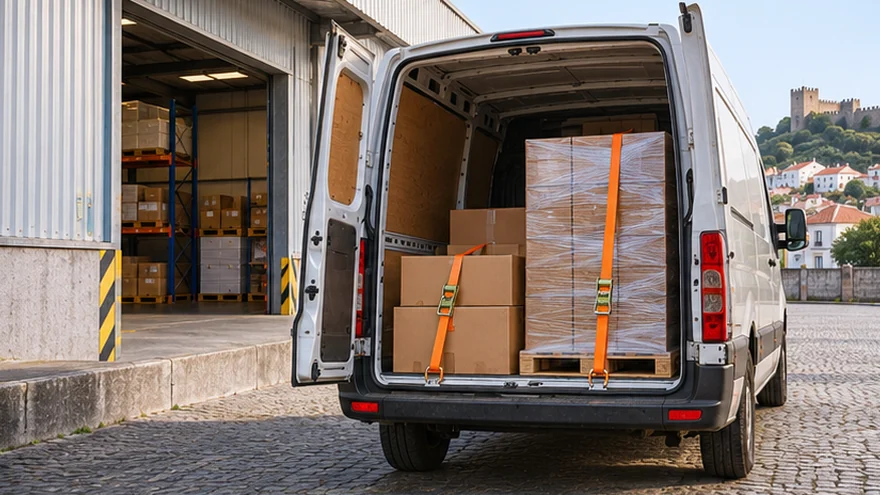
Whenever a company sends or receives goods, there is a risk. A road accident, theft, damage during loading or unloading, a storm or even a logistical error can result in significant losses.
Despite this, many companies believe that the carrier is always liable. In practice, this is not always the case. Depending on the conditions of carriage, the contracts in place and the applicable rules, the loss may be borne by the owner of the goods.
That is why the Transport Insurance It is an essential solution for protecting the value of goods in transit and ensuring business continuity.
In this article, we explain which companies benefit most from this cover and why this insurance is becoming increasingly important.
What is Transport Insurance?
Transport Insurance is a policy that protects goods whilst they are in transit, whether within the country or internationally.
The cover may apply to various modes of transport, such as:
- Road transport;
- Maritime transport;
- Air transport;
- Rail transport;
- Multimodal transport.
Depending on the policy taken out, cover may be provided for damage, loss or theft occurring from the time of dispatch until the goods are delivered.
Why is it important to protect goods?
Every day, companies invest thousands of euros in products, raw materials and equipment.
A single incident during transport may result in:
- Total loss of the cargo;
- Damage to goods;
- Delays in delivery;
- Breach of contract;
- Customer dissatisfaction;
- Significant financial losses.
Transport Insurance helps to minimise the impact of such incidents and protect the investment made.
Which companies should take out transport insurance?
Whilst any company that transports goods can benefit from this cover, there are sectors where this insurance is even more important.
Trade and Retail Companies
Shops, supermarkets, distributors and wholesalers move goods on a daily basis between suppliers, warehouses and points of sale.
Wherever there is transport, there is risk.
Even small parcels can result in significant losses if they are damaged or lost.
E-commerce Companies
The growth in online sales has significantly increased the number of parcels dispatched each day.
Online shops face challenges such as:
- Lost parcels;
- Damage during transport;
- Theft of cargo;
- Customer complaints.
Transport insurance helps to minimise these risks and protect your company’s reputation.
Industrial Companies
The industry relies on the constant transport of:
- Raw materials;
- Components;
- Machines;
- Finished products.
Any disruption to the supply chain can affect production and result in high costs.
Logistics and Distribution Companies
Companies specialising in transport and distribution handle high-value goods on a daily basis.
Adequate cover enables you to respond more quickly in the event of an accident, theft or damage whilst travelling.
Importers
Companies that import goods often face risks during international transport.
Depending on the Incoterms agreed between the buyer and the seller, responsibility for the goods may pass before they arrive at their destination.
In such cases, transport insurance is essential.
Exporters
Portuguese exporters ship goods to various countries every day.
The greater the distance travelled, the greater the exposure to risks such as:
- Accidents;
- Storms;
- Theft;
- Faults;
- Damage during port operations.
Construction Companies
Equipment, tools and materials are often transported between different building sites.
The loss or damage to these items may cause significant delays to the work.
Agricultural and Agri-Food Companies
Agricultural and food products require special care during transport.
In many cases, a delay or a failure to meet transport conditions can completely compromise the goods.
Which goods can be protected?
Depending on the insurer, various types of property may be covered, including:
- Food products;
- Drinks;
- Electronic equipment;
- Industrial machinery;
- Raw materials;
- Pharmaceutical products;
- Textiles;
- Furniture;
- Chemicals (subject to specific conditions);
- High-value goods.
It is important to check the exclusions and conditions applicable to each type of cargo.
What are the main risks during transport?
The transport of goods is subject to a number of unforeseen circumstances.
Among the most common are:
Road accidents
Collisions or accidents may result in total or partial damage to the cargo.
Theft
High-value goods are often targeted by thieves whilst in transit or at rest areas.
Fire
Fires in vehicles or containers may result in the total loss of the goods.
Natural phenomena
Storms, floods or other weather-related events may compromise the integrity of the cargo.
Damage during loading and unloading
Goods handling operations are one of the main causes of damage.
Loss
Logistical errors can result in the temporary or permanent loss of goods.
Who is liable for the damage?
This is one of the most frequently asked questions.
Liability depends on a number of factors, including:
- Contract of carriage;
- Incoterms used;
- Applicable legislation;
- Carrier’s liability;
- Terms agreed between the buyer and the seller.
Even where the carrier is liable, compensation may be limited by law — for domestic transport, to €10 per kilogram of the gross weight of the goods, pursuant to Article 20 of Decree-Law No. 239/2003 of 4 October; for international transport, to 8.33 units of account (SDR) per kilogram, pursuant to Article 23 of the CMR Convention — or by the terms of the contract entered into.
For this reason, many companies choose to take out their own transport insurance, ensuring more comprehensive cover.
How do you choose the most suitable transport insurance?
Before taking out a policy, it is important to consider:
Value of the goods
The higher the value of the cargo, the higher the sum insured should be.
Frequency of transport services
Companies with regular shipments can benefit from more cost-effective annual solutions.
Destinations
Domestic transport presents different risks to international transport.
Type of goods
Fragile, perishable or high-value goods require specific cover.
Means of transport
Each mode of transport presents its own risks, which must be taken into account when choosing a policy.
Why choose CJ Seguros?
At CJ Seguros, we help businesses across all sectors to protect their goods whilst in transit.
We work with a range of insurance companies to find the solution best suited to each client’s needs.
Our experts analyse:
- Type of activity;
- Goods in transit;
- Value of the cargo;
- Frequency of transport services;
- Domestic and international destinations.
In this way, we ensure a solution tailored to your company’s risk profile.
Have you heard of our Transport Insurance and request a free simulation.
Conclusion
Whenever a company transports goods, it takes on risks that can result in significant financial losses. From traditional retail to e-commerce, and across industry, logistics, agriculture and exports, an incident during transport can jeopardise commercial relationships and affect business continuity.
Transport Insurance helps to protect this investment and ensures greater peace of mind across all logistics operations.
In CJ Seguros, we help companies across various sectors to find bespoke solutions that ensure the protection of goods in transit, both in Portugal and abroad.
If you’re reviewing the security of your logistics operation, do also check that other business insurance may be relevant to your business.
Frequently Asked Questions
Is it only hauliers who need transport insurance?
No. Companies that send or receive goods can also benefit from this protection, particularly when they assume the risks associated with the cargo during transport.
Does the insurance cover international travel?
Yes. There are specific insurance policies for domestic and international shipments, tailored to the type of goods and the destination.
Does Transport Insurance cover damage during loading and unloading?
Depending on the policy, yes. It is important to check whether this cover is included in the terms and conditions of the policy.
How to choose the best transport insurance?
The choice should take into account the type of goods, the value of the cargo, the frequency of shipments, the destinations and the risks associated with the business. CJ Seguros can help you compare different solutions and identify the most suitable one.
 Portuguese
 French
 English